


Digital Inclusion - awareness and support


What are you looking for?

Back to results
20 August 2026
What if the lowest carbon building option is the one that's already there?
Share


Link copied
Rethinking the blank slate
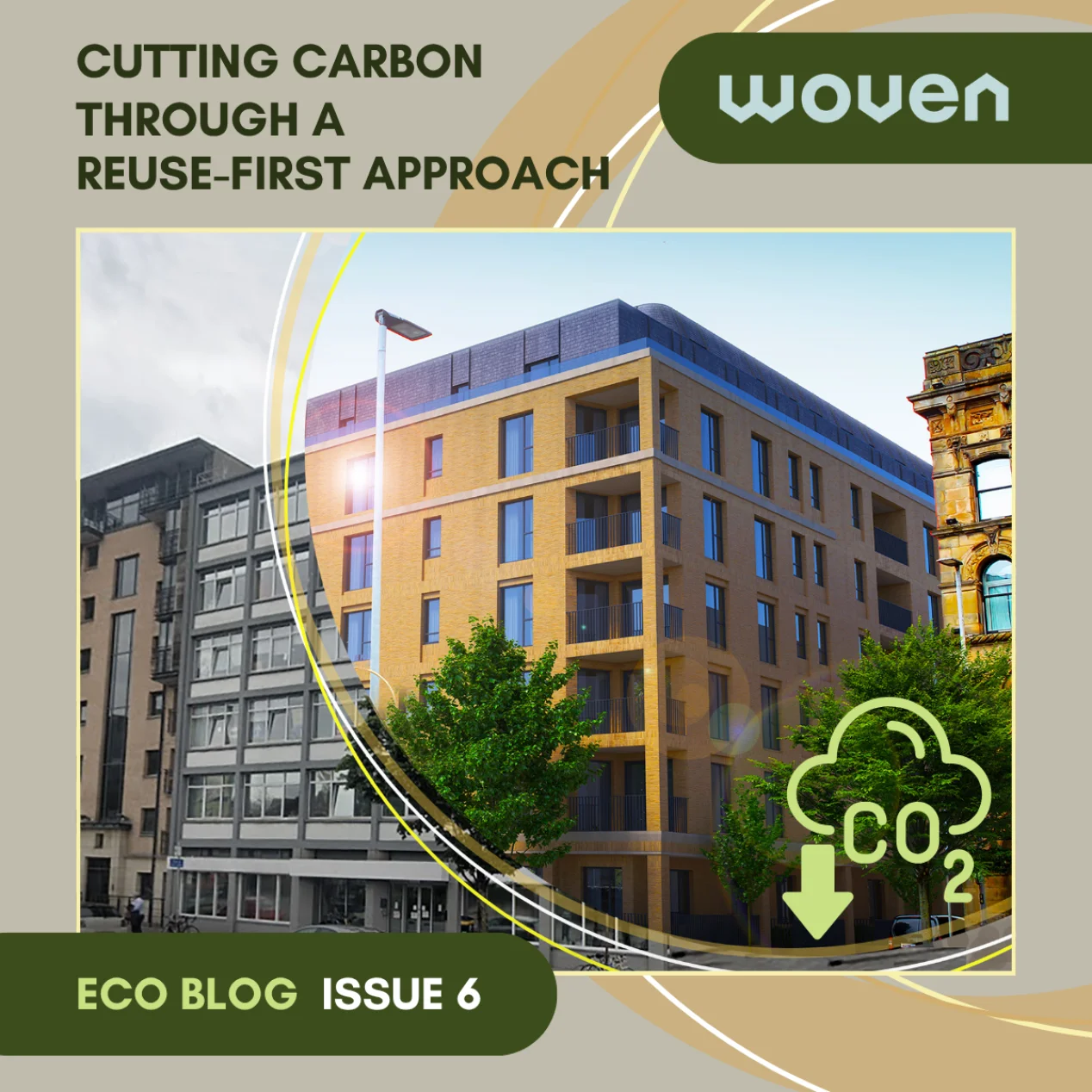
Marlborough House will deliver 103 new homes in the heart of Belfast.
Early site investigations identified a listed building, alongside a six-storey structural frame from a former office block situated in the heart of Belfast City Centre.
Initially, the approach was straightforward: demolish the structure and start again.
But through close collaboration with our delivery partners The Martin Group, and after extensive structural testing of the existing concrete frame and existing concrete foundations, a different opportunity emerged.
Marlborough House Proposed Plans.
➡️ The scheme has been redesigned to retain and reuse the existing concrete base and frame
➡️ Two additional floors will be added
➡️ More homes delivered within the same footprint
All while blending the site’s industrial heritage with modern, sustainable design.
The lowest carbon building is often the one already standing!
This reuse-first approach is expected to:
✅ Significantly reduce embodied carbon by avoiding large volumes of new concrete
✅ Prevent construction waste by keeping existing materials in use
✅ Shorten the build programme through reduced demolition and groundworks.
Designing around an existing structure does introduce complexity, and higher upfront cost, but it allows us to prioritise long-term value over short-term simplicity.
ESG in practice
🌱Environmental: Retention of ~ 3000m² of concrete flooring and structural frame
🤝Social: Reduced demolition supporting faster delivery of homes in a high-demand area
⚖️Governance: Decisions assessed using whole-life value, not capital cost alone
Why this matters...
While retaining the structure may increase upfront costs, the whole‑life benefits are clear, lower embodied carbon, avoided demolition emissions, and faster delivery.
This approach is estimated to retain hundreds of tonnes of embodied carbon.
Final thought…
At a time of both housing and climate emergencies, this scheme shows how reuse‑first development can cut carbon while delivering lasting value.
see less